What happened here?
The production of papyrus in ancient Egypt around 3000 BCE made writing and record-keeping much easier. Egyptians processed the stems of the papyrus plant into thin layers, pressed and dried them into a practical writing surface. Papyrus was lighter and more convenient than clay tablets, making it essential for administration, religious texts, and literature. Its use supported the growth of bureaucracy and learning across the Mediterranean world.
Learn more about this event
The First Leaves of Ancient Papyrus
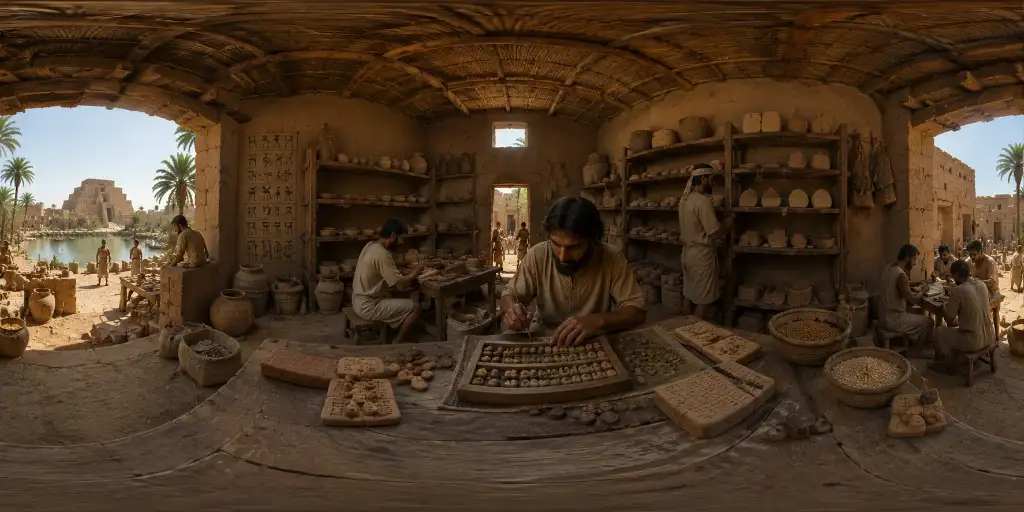
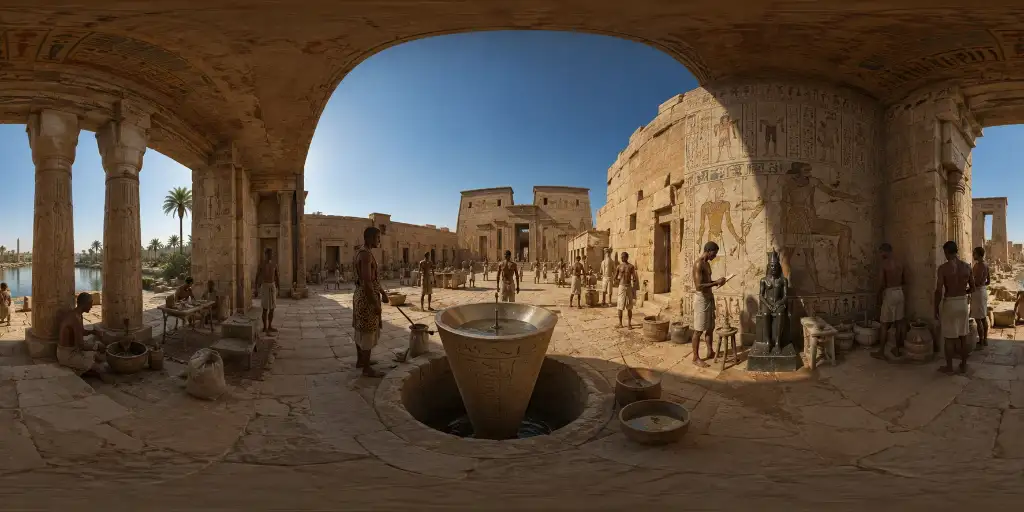
In a workshop on the banks of the Nile, Egyptians gathered around a pile of freshly harvested stalks of Cyperus papyrus. It was around 3000 B.C. when they sought a more efficient way to store information. Clay tablets, used until then, were heavy and cumbersome. Craftsmen began experimenting with the plant that grew abundantly along the river, trying to create a new type of writing material from it.
The stalks of papyrus were cut into thin strips, which were overlapped and pressed to create a smooth surface. Once dried, a lightweight and easily portable material—papyrus—was formed. This invention allowed Egyptians to write longer texts and store them in the form of scrolls, which was previously unthinkable. Papyrus quickly became the foundation for administration, religious texts, and literature.
The spread of papyrus marked a revolution in information storage. Records could now be easily transported and copied, leading to the development of literacy and administration not only in Egypt but throughout the Mediterranean. Papyrus became a key medium that endured for thousands of years and laid the foundation for future civilizations.
Where it happened
Coordinates: 30.0444, 31.2357 · View larger map
FAQ
In what year did Production of Papyrus happen?
It happened: 3000 BC.
What was Production of Papyrus?
The production of papyrus in ancient Egypt around 3000 BCE made writing and record-keeping much easier. Egyptians processed the stems of the papyrus plant into thin layers, pressed and dried them into a practical writing surface. Papyrus was lighter and more convenient than clay tablets, making it e
Where can I try Production of Papyrus?
On HistoryGuesser — explore a 360° scene and guess where in the world and in what year it happened.
What you'll see here
In the game you stand right at this place in a 360° panorama and guess where and when the event happened.
View in 360° →