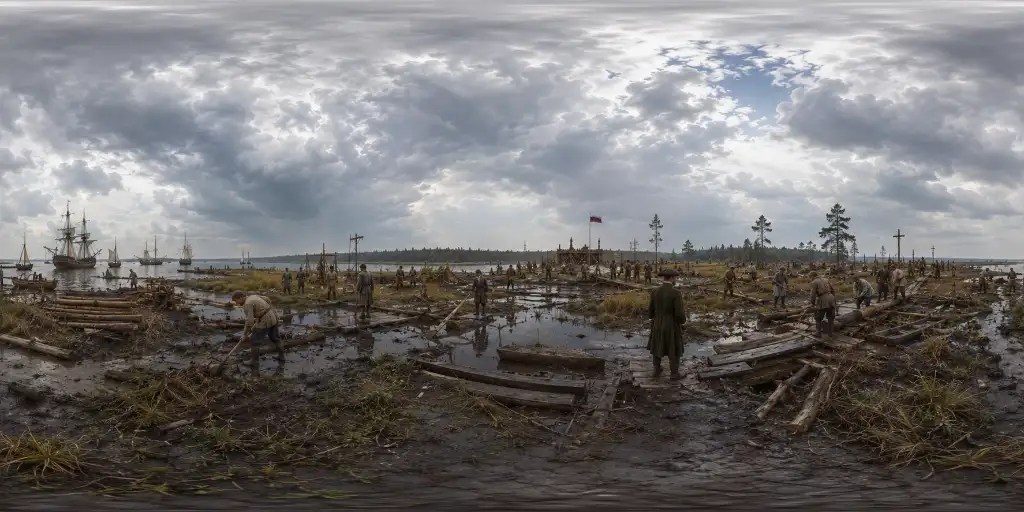
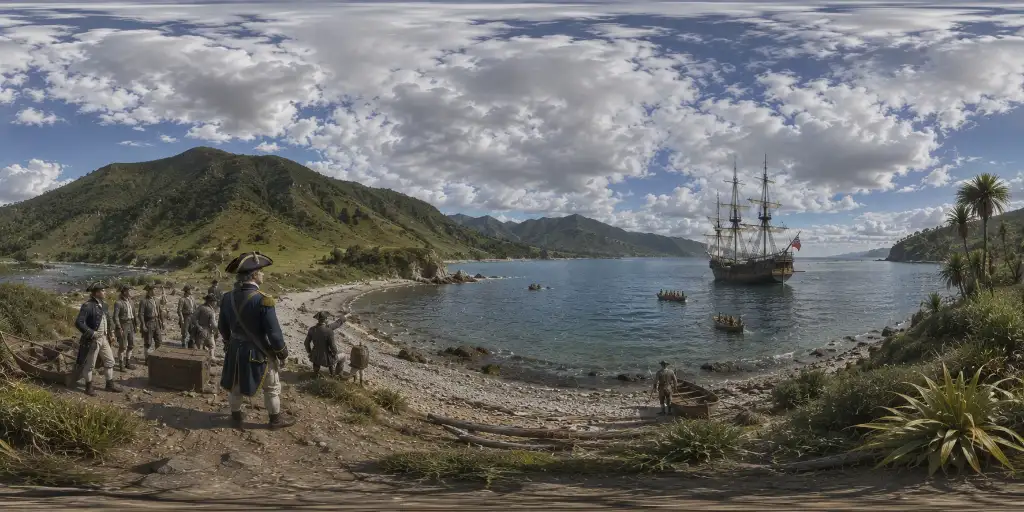
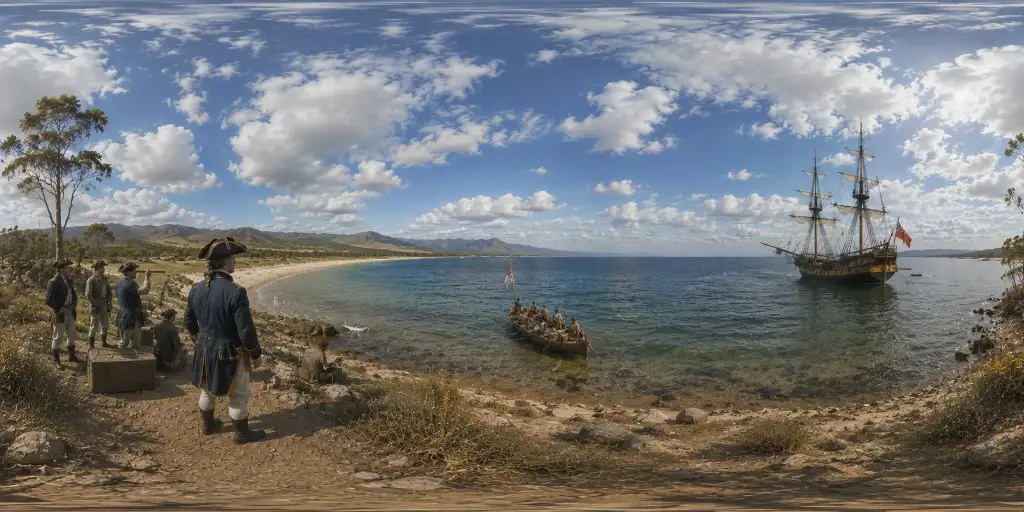
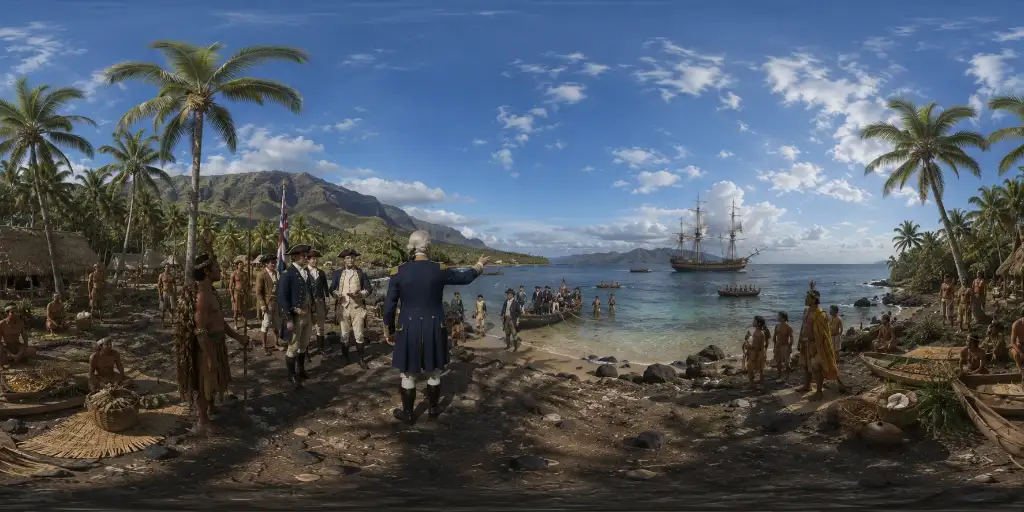
What happened here?
In 1722, Dutch navigator Jacob Roggeveen became the first European to land on Easter Island. He discovered the island on Easter Sunday, which gave it its name. Roggeveen was fascinated by the giant stone statues, moai, he saw on the island, and his visit provided Europeans with the first reports of this isolated culture. The encounter with the natives was mixed, with initial friendliness quickly turning into conflict. Roggeveen's expedition paved the way for further European explorers.
Learn more about this event
Europeans' First Encounter with the Moai Statues
On Easter Sunday in 1722, Dutch navigator Jacob Roggeveen and his crew approached an unknown island in the middle of the Pacific Ocean. The island, later named Easter Island, appeared as a solitary landmass with mysterious giant moai statues towering over the landscape. Roggeveen, fascinated by these monumental stone figures, did not realize that he had just become the first European to report on them.
The initial reception from the natives was friendly. Roggeveen and his crew were curious about the local customs and culture, but it soon became apparent that cultural differences and misunderstandings could lead to conflicts. Tensions rose when a misunderstanding over the exchange of gifts resulted in a violent skirmish. Roggeveen realized that his presence might pose a threat to the local inhabitants and decided to leave the island.
Roggeveen's visit to Easter Island brought Europeans the first reports of this isolated culture and its monumental statues. His expedition paved the way for other European explorers who began to explore and map the Pacific. The island became a point of interest for scientists and adventurers, leading to further contacts and changes in the lives of its inhabitants. The moai became symbols of the island's mysterious cultural heritage.
Where it happened
Coordinates: -27.1206, -109.3517 · View larger map
FAQ
In what year did Jacob Roggeveen arrives at Easter Island happen?
It happened: 1722.
What was Jacob Roggeveen arrives at Easter Island?
In 1722, Dutch navigator Jacob Roggeveen became the first European to land on Easter Island. He discovered the island on Easter Sunday, which gave it its name. Roggeveen was fascinated by the giant stone statues, moai, he saw on the island, and his visit provided Europeans with the first reports of
Where can I try Jacob Roggeveen arrives at Easter Island?
On HistoryGuesser — explore a 360° scene and guess where in the world and in what year it happened.
What you'll see here
In the game you stand right at this place in a 360° panorama and guess where and when the event happened.
View in 360° →